
Columbia Anesthesiology Faculty Help Shape New Book on Tibetan Monastic Debate

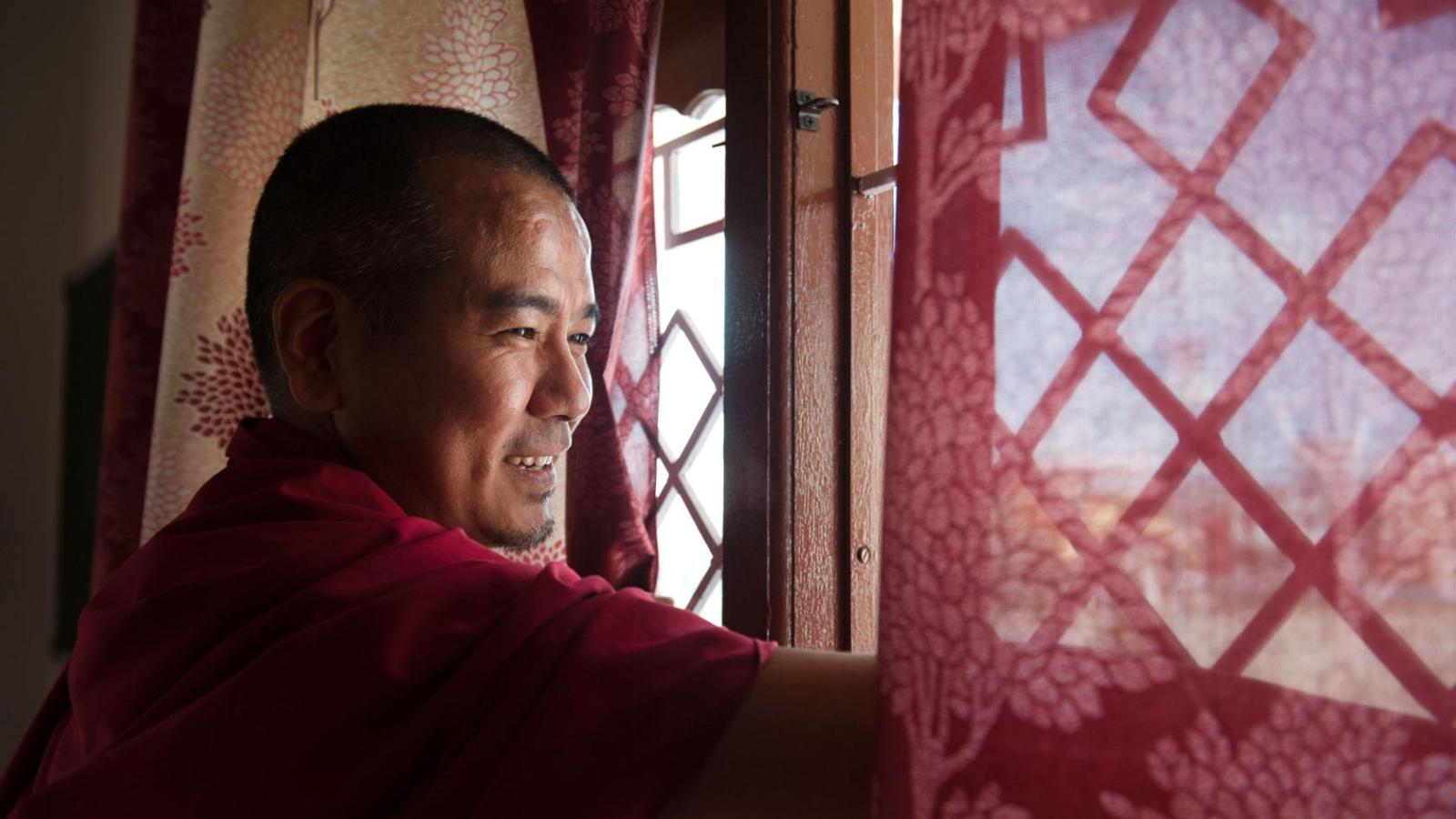
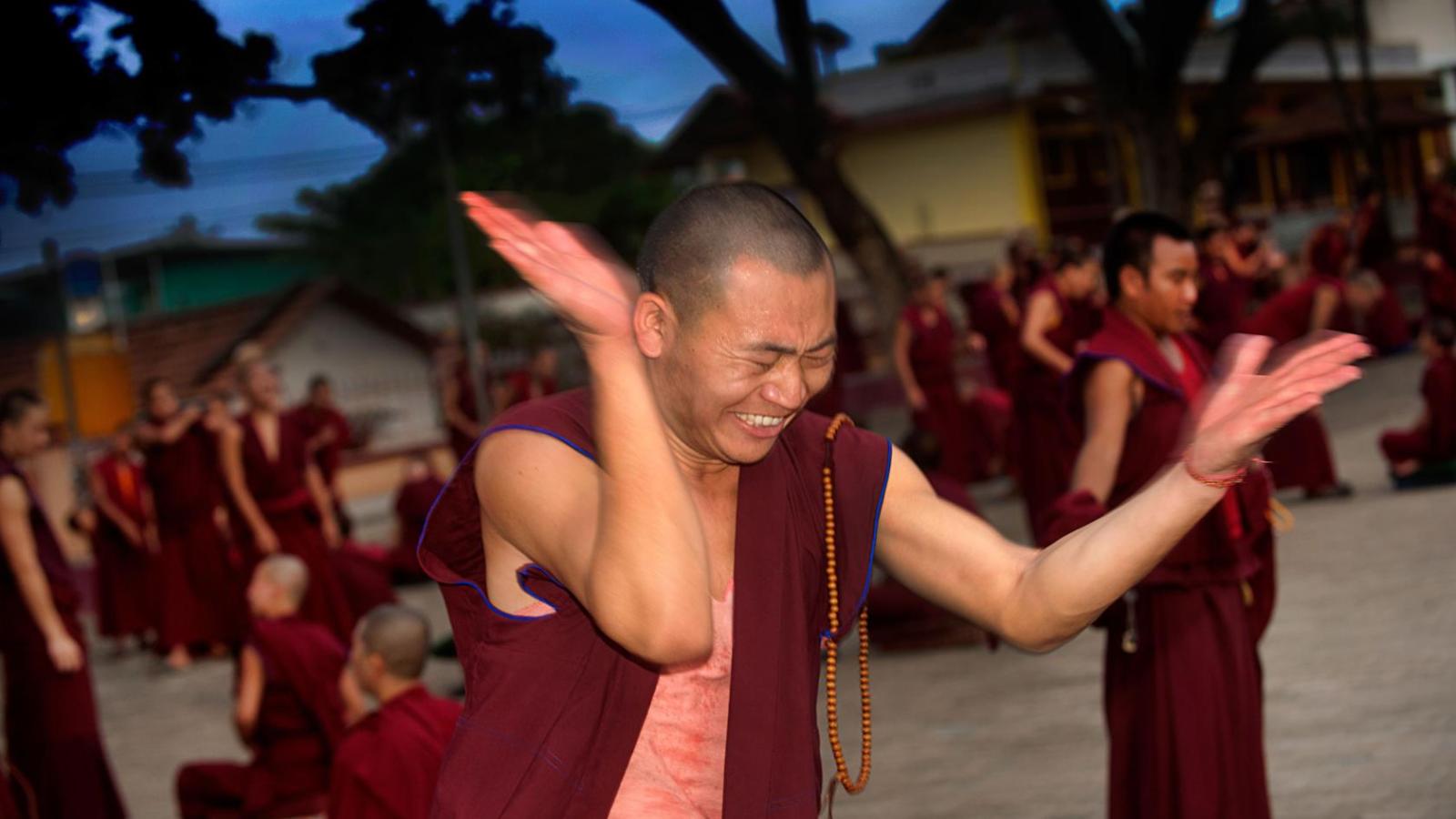
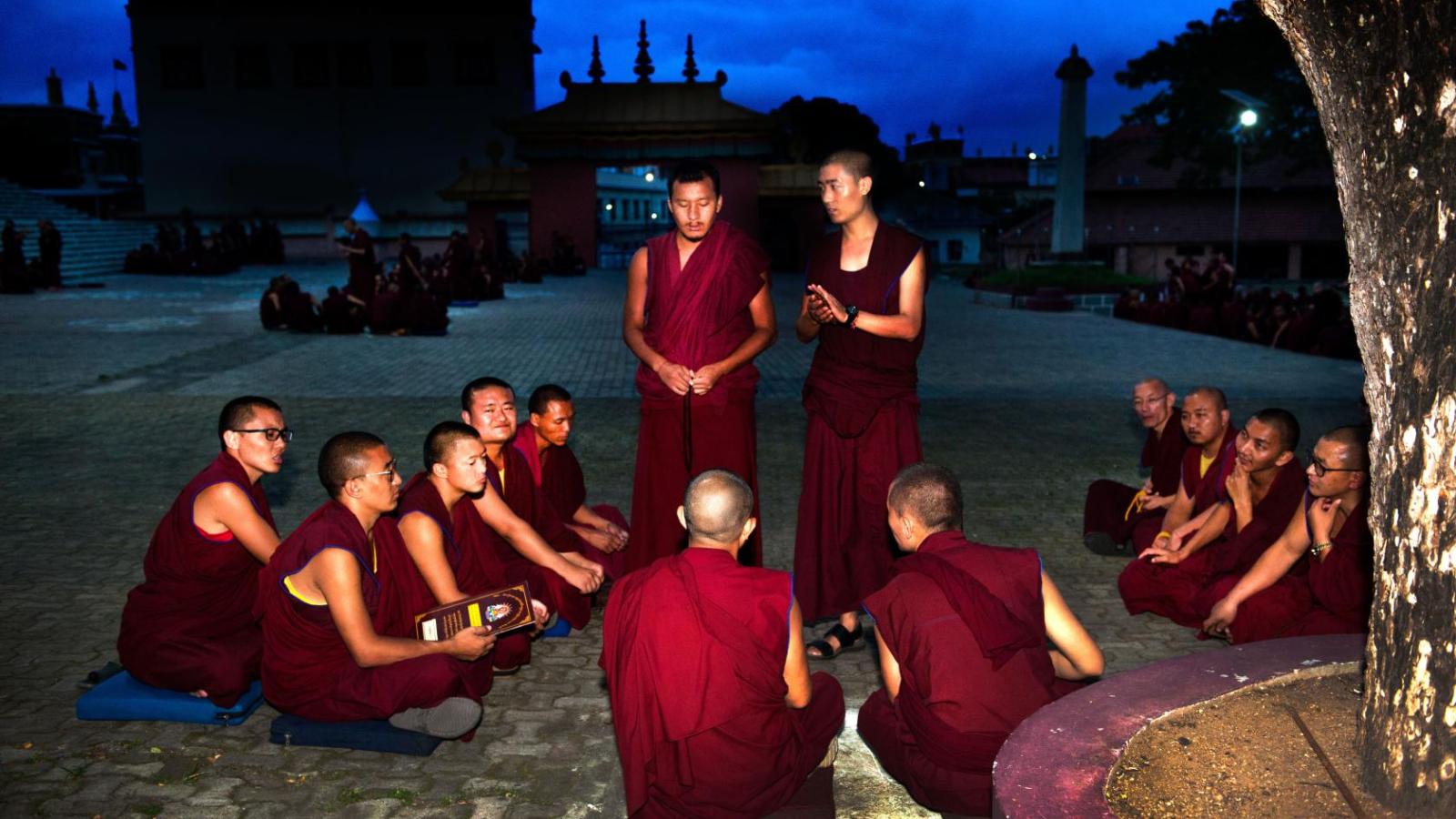
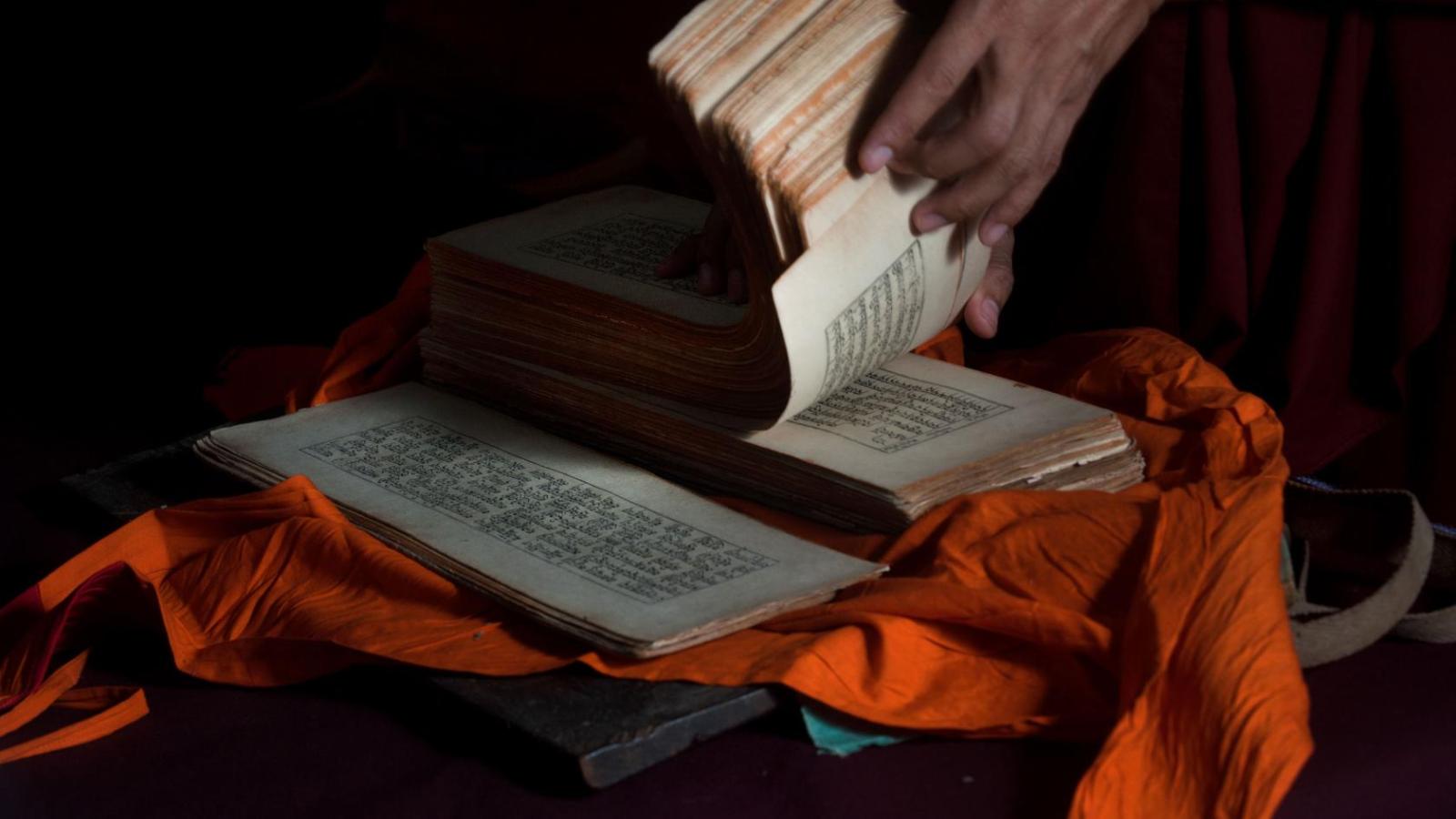
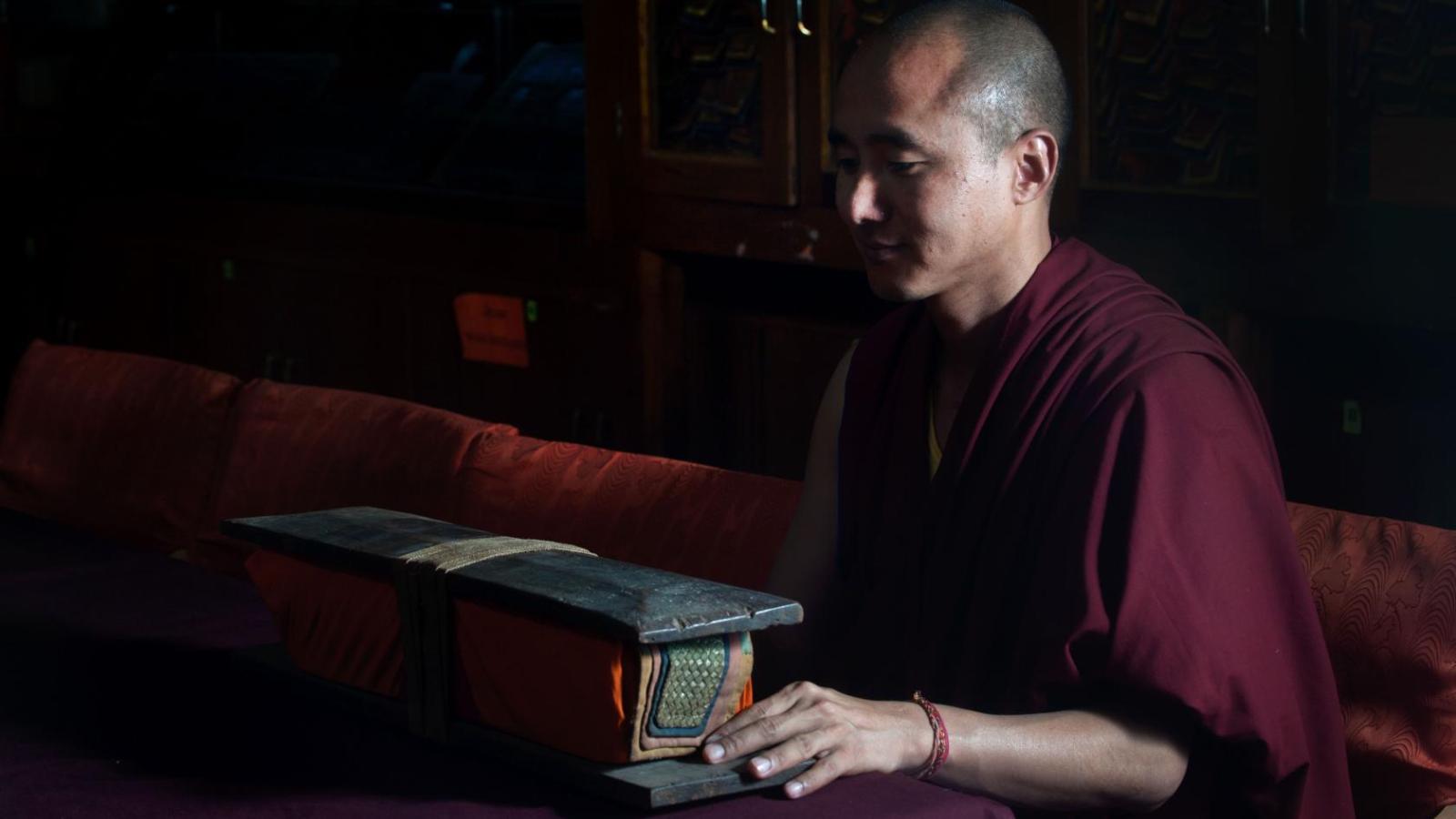
I was immediately intrigued and almost mesmerized by the visuality of these debates. I knew there was nothing rehearsed or staged about them, yet they were intensely focused and alive with intellectual energy. --photographer Nancy A. Scherl
An encounter at a Tibetan monastery in southern India became the foundation for Challenger and Defender: The Great Tradition of Tibetan Monastic Debate, a photography book that brings together Nancy Scherl’s images with essays by contributors whose perspectives helped shape the project from its earliest stages. Among the contributors to the 2025 publication are Richard Raker, MD, retired Columbia Anesthesiology faculty member, and Paul Garcia, MD, PhD, Chief of the Division of Neuroanesthesia.
While the book centers on a centuries‑old Buddhist educational tradition, the involvement of our faculty reflects the department’s broader engagement with inquiry, education, and interdisciplinary dialogue.
Scientific Perspectives on a Rigorous Intellectual Tradition
Tibetan monastic debate is a highly structured practice in which a standing “challenger” questions a seated “defender” in rapid exchanges designed to test logic and deepen understanding. In his essay, Dr. Raker draws parallels between this tradition and modern scientific inquiry, noting their shared reliance on observation, disciplined reasoning, and intellectual challenge.
Dr. Raker’s contribution is informed by his experience teaching neuroscience through the Emory–Tibet Science Initiative, where monastic students explored scientific concepts through debate as a primary learning method. His essay reframes monastic debate not as a cultural curiosity, but as a recognizable mode of inquiry to those trained in science and medicine.
Dr. Garcia offers a complementary perspective grounded in neuroscience and human behavior. His essay focuses on the physical and cognitive demands of debate, including the emphatic “clap and hold” gesture that punctuates key moments in an exchange. From a neuroscientific standpoint, he sees the practice as one that requires sustained attention, emotional regulation, and composure under pressure, characteristics required of physicians working in high‑stakes clinical environments.
Together, the essays position monastic debate as a disciplined intellectual tradition that resonates with the habits of mind central to anesthesiology.
A Project Bridging Education, Science, and Art
Scherl first encountered Tibetan monastic debate in 2019 while documenting activities at Sera Mey Monastery in southern India, where Dr. Raker was teaching as part of the Emory–Tibet Science Initiative. The visit evolved into a body of photographic work shaped by the observation of the debates and the scientific exchanges taking place alongside them. Her photographs capture debate as a physically expressive, communal act, grounded in memorization, preparation, and rigorous exchange. The book combines those images with essays by contributors who helped contextualize the tradition for broader audiences.
The volume also includes a preface by His Holiness the 14th Dalai Lama, who reflects on debate as a cornerstone of Tibetan monastic education and a means of cultivating critical thought.
Challenger and Defender illustrates how our faculty’s expertise can reach beyond the operating room and laboratory into global conversations about learning. Drs. Raker and Garcia helped shape a cross‑disciplinary exploration of how knowledge is tested, communicated, and refined. Their participation underscores the ways in which medical perspectives can illuminate traditions of inquiry, and how those traditions can inform contemporary scientific thinking.